 Skip to content

Sagres, Algarve: Things to Do, Beaches & Where to Stay
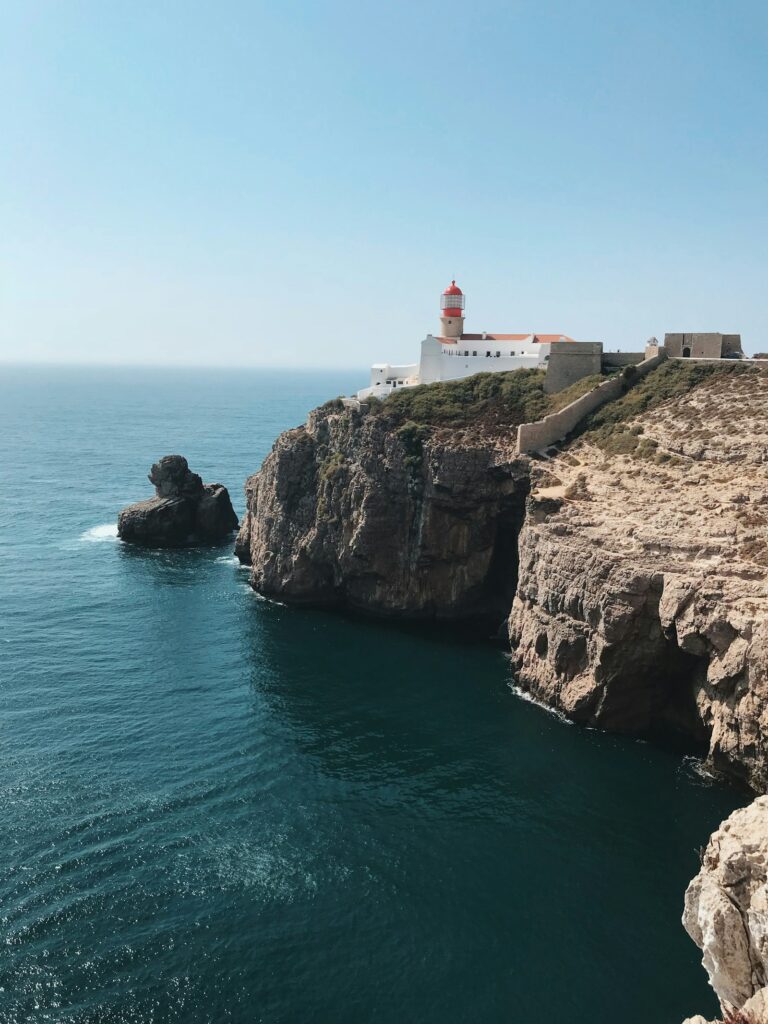
A fortress, a cape, surf beaches on two coasts and wind most days: what Sagres is good for, what is closed, and how to plan it.
Sagres is worth the drive if you want cliffs, surf, big skies and a sunset at the end of Portugal; it is the wrong choice for a calm, hot, resort-style beach week.
The best things to do in Sagres are the clifftop Fortaleza de Sagres, sunset at Cabo de São Vicente, the surf and wind-sport beaches, and walking the Rota Vicentina cliffs. It suits walkers, surfers, birdwatchers, stargazers and anyone who likes the feeling of the end of the road.
Two things catch visitors out. The Cabo de São Vicente lighthouse, which many guides still describe as open, is listed by Visit Algarve as closed to visitors for an indefinite period. And the wind is not an occasional nuisance here; it shapes the whole day, from which beach you pick to whether you sit outside for lunch.
The fortress
A whole headland of ramparts and open esplanade, with cliff views in both directions.
Cape sunset
Cabo de São Vicente is an open, windy headland a short drive away, best in the last hour of light.
Surf and wind
Swell and wind arrive from several directions, so lessons and rentals are easy to find.
Cliff walks
The Rota Vicentina has one-day stages in both directions from Sagres.
Sagres in brief
Sagres is a small fishing village on a headland at the south-western tip of the Algarve, in the municipality of Vila do Bispo. There is a village centre, a fishing harbour, a scatter of hotels and guesthouses, and then open scrubland, cliffs and sea in every direction.
The geography is the point. The south-facing beaches east of the headland are partly sheltered from the summer northerly; the west-facing ones take the Atlantic swell head on. On the same afternoon you can find a flat bay and a surf break within a short drive of each other, which is why surfers, kitesurfers and families can all be happy here, just not on the same sand.
- Best for: walking, surf and wind sports, stargazing, birdwatching in autumn, quiet beaches on the west coast.
- Not for: nightlife, a big choice of shops, or guaranteed calm weather for sunbathing.
- Trade-off: the wind that makes the surf also makes lunch on a terrace a negotiation; bring a windproof layer in every month.
The sea off Sagres averages around 19°C from June to September in our sea-temperature model, and around 16–18°C from December to April, so expect the west-coast chill. Sagres works in winter if you accept grey days, strong wind and a quieter village.
Things to do in Sagres
Fortaleza de Sagres
The fortress occupies the whole headland, with long exposed walls, a big open esplanade and views along the cliffs. Allow a slow hour or two, and wear shoes you can stand on in a gust. Prices and closing days are from Museus e Monumentos de Portugal and the fortress’s own price list.
| Ticket | Price | Notes |
|---|---|---|
| Normal | €10 | Standard adult entry |
| 65+, aged 13–24, families | €5 | Bring proof of age or an ID; a family is an adult with a minor |
| Children under 12 | Free | With an adult |
| Portuguese residents | Free on 52 days a year | Days of their choice |
The fortress is closed on 1 January, 22 January (the Vila do Bispo municipal holiday), Easter Sunday, 1 May and 25 December. Hours are 9:30 to 17:30 from October to April, with the last entry 30 minutes before closing. The published summer timetable (May to September) runs to 20:00, but the operator’s page currently carries a footnote keeping 9:30–17:30 until further notice, so check fortalezadesagres.pt before a late-afternoon visit.
Cabo de São Vicente at sunset
The cape is a short drive from Sagres, and its sunset viewpoint is the best-known thing to do in the area. It is an open headland with a lot of wind, so go with a jacket, keep behind the barriers and supervise children near the edge.
Heads up: the lighthouse is listed as closed
Visit Algarve describes the cape’s 16th-century fortress as closed to the public, and says the lighthouse (built in 1904 and still operating) is closed to visitors for an indefinite period for operational reasons. The Navy’s lighthouse service also lists the museum space on site as closed for renovation. The cape, the car park and the views are outdoors; the lighthouse interior and museum are the parts to check before you go.
Local tip: Combine the cape with the fortress on the same day: fortress in the late morning, an unhurried lunch in the village, then the cape for the last hour of light.
Walking the cliffs
Sagres is a natural base for the Rota Vicentina. The Algarve-side Fishermen’s Trail stages around here are Carrapateira to Vila do Bispo, Vila do Bispo to Sagres, Sagres to Salema and Salema to Luz. The Historical Way, a slightly easier route, ends its Algarve section with Vila do Bispo to Cabo de São Vicente.
The easiest stage to try from a Sagres base is the one that ends in the village, because you only need a lift to the start. Expect sand underfoot and wind on the exposed tops; the stages are linear, so book a taxi for one end. Our guide to hiking in the Algarve has the trail rules and compares the routes, and the Costa Vicentina guide covers the coast to the north.
Surf and wind sports
The Sagres area is the Algarve’s steadiest surf and wind-sport territory, because it catches swell and wind from several directions. Lessons and equipment are available locally for surfing and kitesurfing; choose a school that explains the launch area and conditions, because wind sports on this coast are for people with instruction, not for improvising. Our best surf beaches list shows which breaks are working today.
Stargazing, birds and boats
Away from the village lights, the headland is a good place to look up on a clear night; our stargazing guide covers the practical side. In autumn the point is also a bird migration watchpoint, and our birdwatching guide explains why. Dolphin trips and coastal boat tours also cover this stretch, but departure points and winter schedules vary by operator; the tours below are a starting point.
Sagres beaches
Sagres has two beach characters. The south-facing beaches are the gentler ones; the west coast is for wind, swell and space. Several hold Blue Flag status for 2026 on the ABAAE list: Tonel, Zavial, Castelejo, Mareta, Martinhal, Burgau, Cordoama, Ingrina, Salema and Almádena-Cabanas Velhas. Beliche, notably, is not on it.
Praia do Tonel
Best for: families and easy access, close to the village. Heads up: faces south-west, so it catches some Atlantic swell. Blue Flag 2026.
Praia de Beliche
Best for: a cliff-backed south-facing cove with easy access, on the road to the cape. Heads up: not on the 2026 Blue Flag list.
Praia do Zavial
Best for: a longer sandy south-facing bay east of Sagres, suited to families. Heads up: a drive from the village. Blue Flag 2026.
Praia do Castelejo
Best for: quiet west-coast sand. Heads up: steep path down and big-swell days; not for pushchairs. Blue Flag 2026.
Local tip: Swell and wind turn quickly here. If the Tonel card is rough, try a south-facing bay such as Beliche or Zavial, or open our no-wind beach list.
Where to stay in Sagres
Where you sleep matters more here than in most Algarve towns, because the distances are small but the wind makes walking between places hard work.
-
Best base
Sagres village
Walk to the harbour, restaurants, the fortress and Mareta beach. The choice if you are travelling without a car, though public transport is limited.
-
Best for beaches
The Martinhal side
East of the village, closer to a south-facing Blue Flag beach, but you will want a car for dinner.
-
Calmer villages
Salema, Burgau and Luz
More relaxed, with easier access to Lagos for nightlife. Vila do Bispo, inland, is quieter again if you are happy to drive.
Book early for July and August and for the weeks around the birdwatching festival in October. If you are choosing between Sagres and Lagos: Sagres for wind, walking and big sky, Lagos for restaurants, nightlife and trains. More options are in where to stay in the Algarve.
Where to eat in Sagres
The best advice is to eat fish, and to eat it near where the boats unload. Sagres is a working fishing village, and the local cooking is grilled fish, shellfish, cataplana and, in season, goose barnacles (percebes) from the rocks of this coast. Menus, owners and opening months change, so walk the harbour area and the centre, read the day’s board and book ahead in July and August.
Local tip: Some beachside places and seasonal businesses cut their hours between November and March. Check lunch and dinner times for that day rather than assuming.
Events in Sagres
Nothing is listed in Sagres for the next few weeks yet; see the full Algarve calendar.
Events are published only a few weeks ahead, so the list shows what is currently on; the Algarve events calendar covers the whole region. The big annual date is the Sagres Birdwatching Festival, usually held in early October as the autumn migration passes. The 2026 edition ran 2–5 October (our listing); dates for 2027 have not been published. The fortress itself occasionally hosts concerts, which turn up in the live list when announced.
Getting there & around
Sagres is at the far western end of the line: no train, and the nearest station is in Lagos. Work out the Lagos leg first with our Faro airport to Lagos guide, then continue onward.
Day trips from Sagres
Lagos is the obvious one for old town, restaurants and boat trips. Going north, the west-coast surf beaches at Amado, Bordeira and Arrifana are good for a day each (the Costa Vicentina guide covers them). For a change of scene, Monchique is a day up the mountain, cooler than the coast and a good plan B when sea fog or wind spoils the beach.
FAQ
Is Sagres worth visiting?
How much is the Fortaleza de Sagres?
Can you go inside the Cabo de São Vicente lighthouse?
Which Sagres beaches have a Blue Flag in 2026?
When is the Sagres Birdwatching Festival?
Is Sagres windy all year?

