 Skip to content

The Algarve in January: Weather, Sea Temperature & What’s On
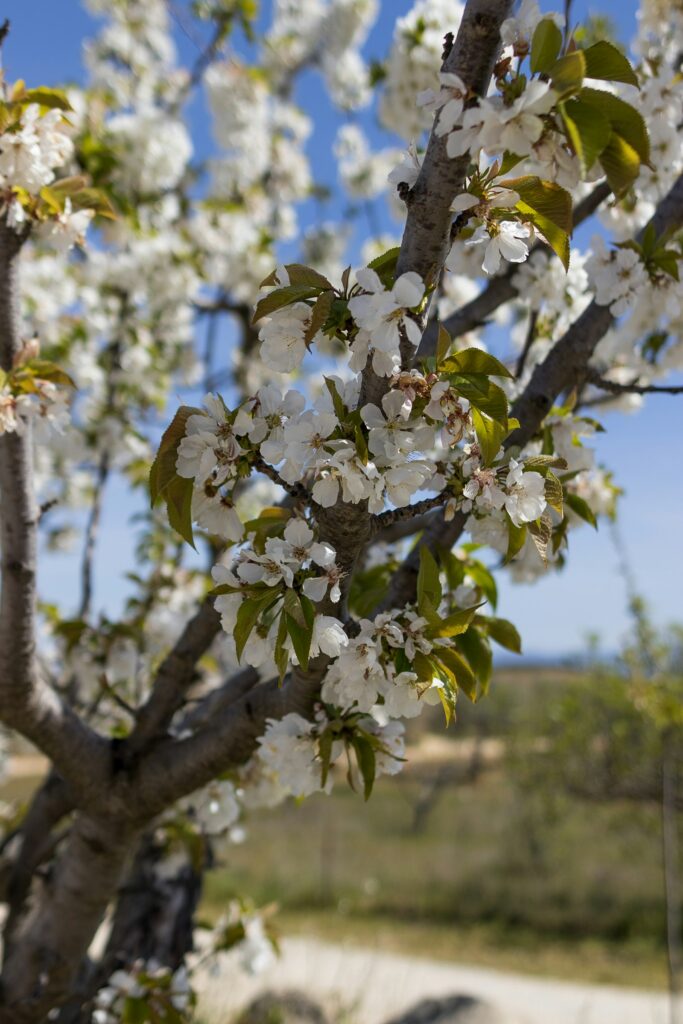
The quietest month: cool, bright and about half as wet as December, with the first almond blossom and empty coastal paths.
January is the Algarve’s quietest and cheapest month, cool but brighter and drier than December: come for walks, flamingos and almond blossom, not for the beach.
January is the Algarve’s coolest and quietest month, and drier than the two before it. At Faro airport the average daytime high is 16.3°C, the night-time low 8.3°C, and rain falls on about 6 days, with 49.3 mm in total against December’s 90 mm. It suits walkers, bird-watchers and anyone escaping a northern winter on a budget; it does not suit a swim-every-day holiday.
Evenings are properly cool, but an afternoon in the sun, out of the wind, is often warm enough for a coffee on a terrace in a T-shirt.
January at a glance
| Measure | January | Notes |
|---|---|---|
| Average daytime high | 16.3°C | Faro airport, 1991–2020 average |
| Average night-time low | 8.3°C | Frost days at Faro average zero in every month |
| Rainfall | 49.3 mm over 6.0 days | Days with 1 mm or more |
| Sunshine | 182 hours (about 5.9 a day) | Older 1971–2000 average; recent years are probably a little sunnier |
| Daylight, mid-month | 9h53 | Sunrise about 07:44, sunset about 17:37, on Portugal’s winter clock (UTC+0) |
| Sea temperature, south coast | about 17–18°C | Model estimate off Faro and Lagos, 2023–2025 average |
| Sea temperature, west coast | about 17°C | Model estimate off Sagres and Aljezur, same period |
Drier than December
Roughly half the rain of December and a few hours more sun, with clear, low light.
Walking weather
Cool, bright days suit the coastal trails; start before lunch, as the sun sets at about 17:37.
Flamingo season
Numbers on the Ria Formosa are highest between October and March.
Almond blossom
Late January into February, depending on the weather; no official bloom date.
Rain and temperatures are the official IPMA normals for Faro; the sea is a model estimate for open water, so coves can differ by a degree or two. Neighbouring months: December and February, or the month-by-month comparison.
What the weather is really like
Compared with December, January is a step cooler but drier and brighter: roughly half the rainfall and about 23 more hours of sun in the month on the old 1971–2000 figures. If you are choosing between the two for a winter break and do not need Christmas lights, January is the better bet on the numbers.
The sea is near its annual low, about 17–18°C on the south coast and 17°C on the west, dipping a little further in February and March. A short dip is possible; surfers wear a 4/3 mm wetsuit with boots from January to March.
Local tip: Dress for a 10°C swing. A sunny, sheltered noon on the south coast can feel like spring, and the same spot after sunset, or anywhere on the windier west coast and in the hills, feels like winter.
Beaches this month
January is a beach-walking month. A long, flat sand beach beats a small cove, because you can keep moving and keep warm. Meia Praia in Lagos is a good example: south-facing, backed by dunes, with easy access and plenty of parking.
Check the wind before you commit: with an onshore breeze, the town is the better answer. There are no lifeguards or seasonal bars outside the bathing season, so bring water and a layer to put on when you sit down.
What’s on in January
January is quiet for big events, and the councils publish only about six weeks ahead, so what follows is the usual pattern, with 2026 dates as examples.
Dates and traditions
1 January is a national holiday (a Friday in 2027), so shops, museums and offices are shut or on reduced hours. The Christmas season ends on 6 January: in 2025/26 the lights in Faro and Tavira stayed up until then. 22 January is Vila do Bispo’s municipal holiday.
The Janeiras are traditional New Year songs, sung by choirs and groups in the first weeks of January. In 2026 the calendar listed the Encontro de Charolas e Janeiras in Loulé and the charolas gathering in Faro, both on 11 January. Other 2026 fixtures were the Grande Prémio dos Reis road races in Faro (10 January) and Lagos’s city-anniversary programme (17–28 January). None has a 2027 date yet.
Local tip: The Janeiras and charolas gatherings are local, often free and rarely advertised abroad, so ask at the tourist office or watch our events calendar.
Almond blossom arrives late January into February, weather-dependent and with no official bloom date, so go and look rather than book around it. The festivals fall in February; see the Algarve in February.
Live calendar
No events are listed for this month yet; the calendar fills up about six weeks ahead.
The full Algarve events calendar has everything else.
What’s open and what’s closed
The towns stay open; what shrinks is the beach-and-boat side, and some small businesses take a winter break. There is no published list of closures, so ring ahead for anywhere you have set your heart on.
| What | January 2027 | Check |
|---|---|---|
| Zoomarine and outdoor water parks | Closed Zoomarine reopens Thursday 11 March 2027; the other outdoor parks have no 2027 dates yet. | Water-parks comparison |
| Indoor Aquashow, Quarteira | Check Open daily since 1 October 2026; end date not published. | Operator’s site |
| Ciência Viva, Faro and Lagos | Reduced Faro Tuesday–Saturday until 27 February; Lagos shut Mondays. Both shut 1 January. | Each centre’s site |
| Museums | Open Faro’s municipal museum is shut Mondays; Loulé’s (in the castle) Sundays and Mondays. | Council sites |
| Markets | Open Loulé every Saturday; Almancil usually on the first and fourth Sundays; Tavira’s monthly fair usually on the third Saturday. Confirm with the council. | Markets page |
| Boat trips | Reduced Winter schedules, weather-dependent; expect cancellations. | Book a named operator |
Crowds and prices
January is the quietest month of the year, apart from the first few days while schools are still on their Christmas break (English schools go back around 4 January 2027). Our Faro airport car-hire guide calls it the lowest-demand month, at roughly €10–20 a day pre-booked for a small hatchback. The next pressure point is English half term, 15–19 February 2027.
There is no reliable hotel price index, so check live rates. The search below covers Tavira, which works well in winter because it is walkable and much of it stays open all year.
If you have not booked flights, the first week of the year tends to cost more than the weeks after it.
Compare flights to FaroAirlines and routes are in our flights to Faro guide.
What to pack
- A fleece and a windproof layer. The average low is 8.3°C, and the sea wind is what makes it feel cold.
- A light waterproof for showers between bright spells.
- Walking shoes rather than sandals; coastal paths are sandy or muddy after rain.
- Binoculars for the Ria Formosa flamingos, and sunglasses for low-sun glare on the roads.
A car lets you chase the dry, sunny pockets and reach the inland almond groves.
Ideas for a week in January
Outdoors from late morning to mid-afternoon, indoors either side, and a couple of days left free to swap with the forecast.
- Bright, calm days: a coastal walk and lunch in the sun. The hiking guide covers the trails; the Rota Vicentina Fishermen’s Trail is walkable in either direction between September and June.
- Bird days: the Ria Formosa salt pans for flamingos; see our birdwatching guide.
- Wet days: museums, a covered market or a wine tasting, grouped by area in the rainy-day guide.
- Town days: Silves, Loulé and Tavira all work in winter without the beach.
After January comes February, with the almond blossom and Carnival (Tuesday 9 February 2027); before it, December. The month-by-month guide puts all twelve side by side.
January is the middle of the season; all three winter months are compared in the Algarve in winter.
FAQ
What is the weather like in the Algarve in January?
Can you swim in the sea in the Algarve in January?
Is January a good time to visit the Algarve?
When does the almond blossom flower in the Algarve?
What is open in the Algarve in January?
How cold are the nights in the Algarve in January?

