 Skip to content

The Algarve Without a Car: A 5-Day Itinerary by Train, Bus & Boat
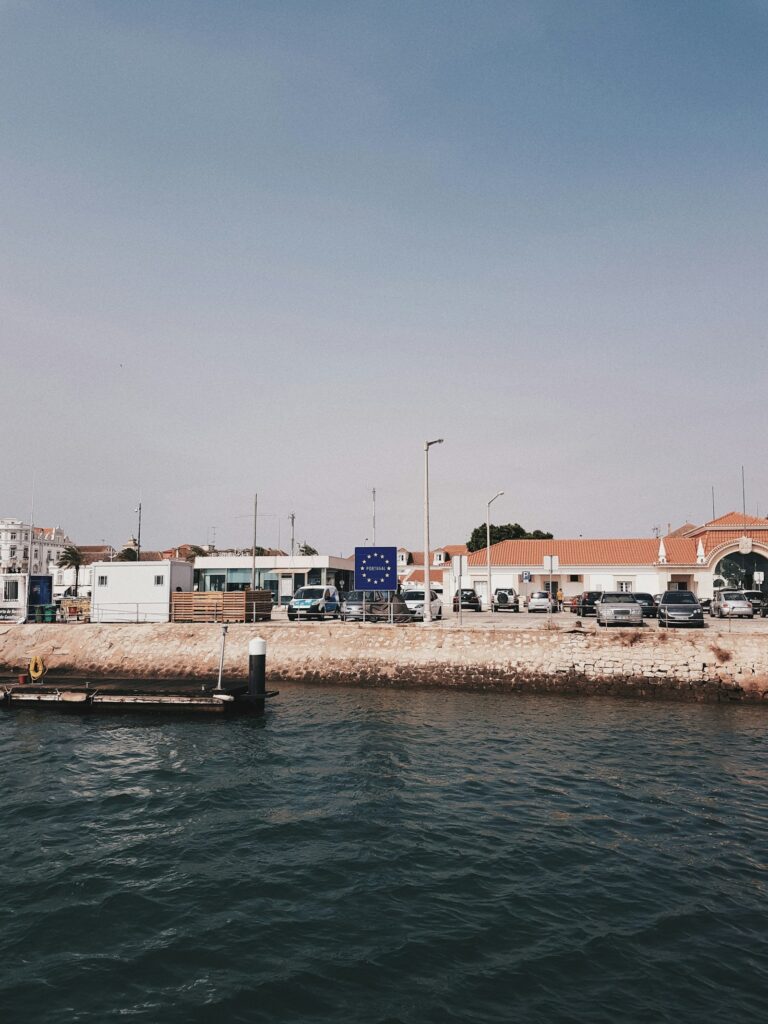
Fly into Faro, base two nights in Tavira and two in Lagos, and reach islands, castles and old towns on one regional rail line and a few ferries.
You can see the best of the Algarve without a car if you stay on the railway: two nights in Tavira, two in Lagos, island ferries in between, and about €37 a head in single and return fares for the whole trip.
The Algarve without a car works best on the Linha do Algarve, the regional line from Lagos to Vila Real de Santo António. It is fully electric since 19 July 2026, serves Tavira, Olhão, Faro, Silves, Portimão and Lagos, and leaves you within a walk or a short ferry ride of the things worth seeing.
This plan starts and ends at Faro airport, so it slots into any flight. It trades beach-hopping for towns, islands and short train hops, which is the honest deal of travelling by public transport here. Every fare and time below is from an operator document valid in 2026, and the few things we could not confirm are flagged.
The five days at a glance
Day 1: Faro to Tavira
City bus, then a regional train east. Evening walk in Tavira.
Day 2: Island day
A short ferry to the sand of Ilha de Tavira.
Day 3: Olhão to Lagos
Ferry to a Ria Formosa island, then the train west to Lagos.
Day 4: Lagos
Old town, a boat to the cliffs, an easy beach.
Day 5 breaks the journey back to the airport in Silves for its castle. The plan assumes a flight that lands and leaves in the afternoon or evening; if yours does not, slide a day.
- Best for: couples, solo travellers and anyone happy to carry one bag between two bases.
- Not for: cliff-top beaches such as Marinha or Benagil, big suitcases on cobbled streets, or anyone who wants to move every day.
Day 1: Faro airport to Tavira
Take city bus 16 from the airport to the Terminal Rodoviário. The fare is €2.85, bought on board, and the ride takes about 16 minutes; the first bus into town is at 05:20 and the last at 00:10. The train station is next to the bus terminal, a short walk with a bag.
Take the regional train to Tavira, €3.60 for Faro to Tavira, about 27 to 33 minutes, hourly (from Faro 07:00 to 22:10). If you land early and have energy, stop in Faro for its old town first. Otherwise go straight to Tavira, check in and walk the historic centre in the afternoon: the river, the bridge and the lanes behind it.
The Casa Museu da Misericórdia and the Núcleo de Arte Sacra open Monday to Saturday, 10:00 to 13:00 and 14:00 to 18:00, at €2 each or €4 together. Hours move, so check the Câmara de Tavira page.
Local tip: If your flight lands after the last train east at 22:10, sleep in Faro and take the first train in the morning. For a door-to-door ride after a late flight, you can compare the options to Tavira or pre-book a transfer below.
Day 2: Ilha de Tavira
The island is the reason to stay in Tavira without a car. From Quatro Águas, the Câmara de Tavira’s winter table (March 2026) shows boats hourly from 10:00 to 16:00, with none at 14:00, plus one at 16:50. The island boat returns at 15 minutes past the hour and the last return is 17:35. An adult pays €1.95 return or €1.15 single. In summer the boat from the centre of town runs about every 30 minutes from 09:00 to 19:00, at €2.60 return on the last published (2025) prices.
We have not seen the summer 2026 table, so confirm the last boat with the Câmara de Tavira before you settle on the sand. Take layers and food in winter, because the boats stop earlier than in summer. See our Ilha de Tavira page for the live conditions. Come back to town for a late lunch and an evening in the old centre.
If you would rather see the lagoon from the water, compare options in our Ria Formosa boat tours guide.
Day 3: Olhão, an island and the train to Lagos
Take the train from Tavira to Olhão, €2.65 on a Regional train. Olhão is where the Ria Formosa ferries leave. To Culatra or Armona the fare is €2.20 single or €4.40 return; the first boat to Culatra leaves at 07:00 and the last from Olhão is at 18:30 between 21 September and 31 May. For Armona, the first is 08:30 and the last 17:00 in winter. Pick one island: Culatra or Armona.
Then take the train to Lagos. Olhão to Lagos costs €9.20 on a Regional train. Olhão to Faro is 7 to 10 minutes and Faro to Lagos 77 to 97 minutes, so allow about an hour and a half to two hours, and trains west run roughly every two hours. Check the last departure before you cross to the island.
Heads up: island return boats
The Olhão fares and times come from a local schedule guide, last updated in September 2026, not from the operator, and they list only departures from Olhão. Ask at the ticket office when the last boat leaves the island, and treat the 18:30 and 17:00 times as the latest departures from Olhão, not the last way home.
Plan B for rain or wind: skip the island. Spend the morning in Faro: the Museu Municipal is open Tuesday to Friday 10:00 to 18:00 and weekends from 10:30 to 17:00, at €4, then take the train to Lagos. On a Saturday, Olhão has an open-air market in the morning.
Day 4: Lagos
Spend the morning on foot in Lagos: the old town and the city walls. On Saturdays the Mercado de Levante runs from 07:00 to 14:00, on the council’s undated page. In wet weather the Ciência Viva centre is open Tuesday to Sunday, 10:00 to 18:00 from October to March, at €6.
The afternoon is for the cliffs from the water. The boat trips from Lagos run to the rock formations at Ponta da Piedade, and our guide to Lagos boat trips compares them. Boats run less often in winter and depend on the weather, so ask the operator.
- Praia Dona Ana, the nearest cove to the old town
- Meia Praia, one stop east by train for €1.60
- Calm beaches when the wind blows
Heads up: Praia do Camilo
Lagos council reported on 6 October 2026 that the Praia do Camilo staircase is being rebuilt and the beach is closed, with no reopening date. Do not plan a day around it.
Day 5: Silves, then Faro airport
Take the morning train from Lagos to Silves for €3.30. The castle opens 09:00 to 18:00 in winter and 09:00 to 20:00 in summer, at €2.80 for adults and €1.40 for children, and the ticket includes the cisterns. The station is south of the river, about 1.5 km from the centre in a straight line and 3 km by road on OpenStreetMap, so allow time for a taxi or an uphill walk.
From Silves, take the train to Faro for €5.85, then bus 16 to the airport for €2.85. Trains west of Faro run about every two hours, so a missed one costs you two hours. Pick a train that leaves you a comfortable margin before your flight, not the last one that technically works.
Local tip: If your flight is early, skip Silves: take the direct train from Lagos to Faro, €8.30, then the airport bus. If it is late, Silves fits comfortably.
What it costs to move
| Leg | Fare | Time | Source |
|---|---|---|---|
| Airport to Faro bus terminal (bus 16) | €2.85 | About 16 min | Proximo timetable |
| Faro to Tavira (train) | €3.60 | 27–33 min | CP |
| Tavira ferry to Ilha de Tavira, return | €1.95 | Check the table | Câmara de Tavira |
| Tavira to Olhão (train) | €2.65 | Hourly line | CP |
| Olhão island ferry, return | €4.40 | Check at the ticket office | Local schedule guide |
| Olhão to Lagos (train) | €9.20 | About 1.5–2 h | CP |
| Lagos to Silves (train) | €3.30 | Check CP | CP |
| Silves to Faro (train) | €5.85 | Check CP | CP |
| Faro bus terminal to airport (bus 16) | €2.85 | About 16 min | Proximo timetable |
Added up, the fares come to about €36.65 per adult. That is Regional train fares from CP’s table valid from 19 July 2026, and it leaves out the boat trip at Lagos, taxis, tickets for the castle and museums, and the Meia Praia hop. For how the line works station by station, see our train and bus guide, and for where to sleep, our no-car stay guide.
Open Find My Beach on the morning of each island or beach day, and keep the other bases in mind: this plan is one of several in our itineraries.
FAQ
Can you really do the Algarve without a car?
How much does the transport cost for this itinerary?
Is it a good winter itinerary?
What if I miss the last train to Lagos?
Can I add Sagres or Albufeira?

